


A 9×12 rug anchors a living room, dining room, or primary bedroom, and the pad underneath it quietly decides whether that anchor stays put or walks around the room. The right pad grips hardwood and tile, softens every step, and shields both the rug backing and the floor finish beneath. Pick the wrong one and you get bunched corners, scratched planks, or a rug that shifts the moment a pet runs by.
The eight pads below cover the main trade-offs you’ll face: thin PVC grippers for keeping things locked down, thick felt for cushion and insulation, and hybrid felt-and-rubber constructions that try to do both. Sizes are real 9×12 cuts, materials and thicknesses are pulled straight from the manufacturer listings, and the recommendations are matched to the way each pad actually performs in a home.
The Main Contenders
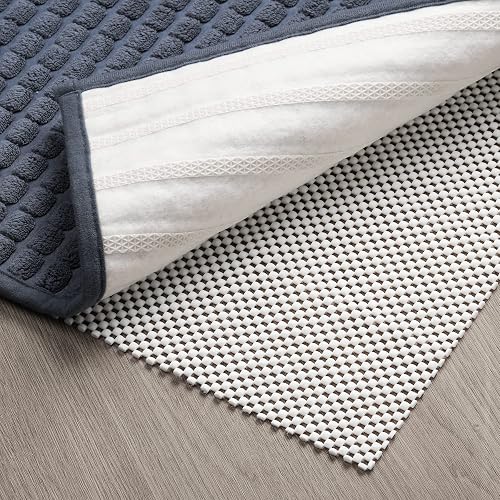
TJWODO Non Slip Extra Thick Rug Pad 9×12
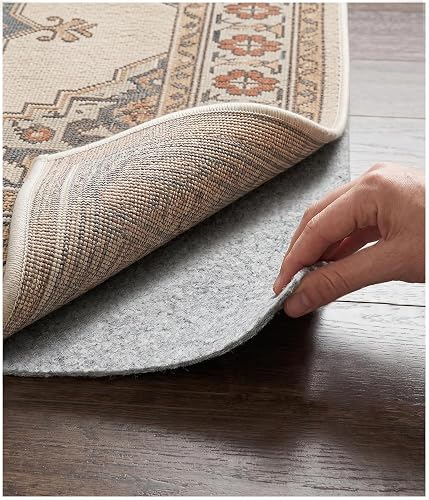
Enjoy Holiday 1981 Felt Rug Pad 9×12, 1/8 Inch
Enjoy Holiday 1981 Felt Rug Pad 9×12, 1/4 Inch
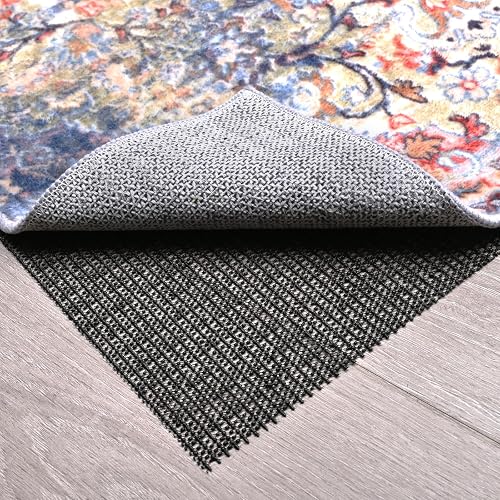
COYACOOL Non Slip Rug Pad 9×12, Black
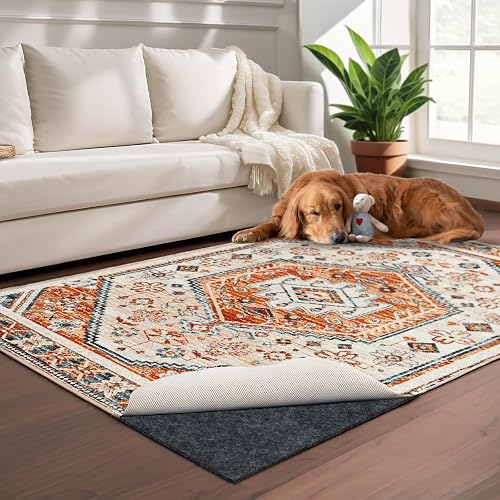
Yxzhyaba Waterproof Felt Rug Pad 9×12

Yxzhyaba 1/4″ Waterproof Felt Rug Pad 9×12

DELLUNA Double-Sided Rubber + Felt Pad 9×12
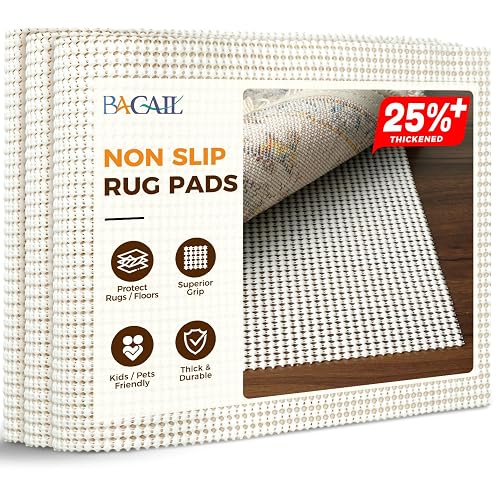
BAGAIL BASICS Extra Thick Rug Pad 9×12
Why These Options Stand Out
The TJWODO pad is a straightforward gripper built for households that want one job done well: keeping a rug where it belongs. The extra-thick profile gives a little more cushion than the thinnest PVC mats, and the open weave construction (a grid-like structure that lets air and dust pass through) helps it vacuum cleanly without trapping grit underneath.
Compared to the felt-only options later in this list, the TJWODO leans entirely on grip rather than plushness, so it suits rooms where sliding is the bigger concern than softness. In most living rooms, you may find the cushion moderate rather than sink-in deep, which is honestly the more practical choice for a pad that has to survive daily foot traffic.
Real-World Strengths
- Holds rugs firmly in place on hardwood, so corners stop curling after a week of use
- Extra-thick build adds noticeable step softness without the bulk of full felt
- Open weave design lets vacuums pull dust through instead of pushing it around
- Extends the useful life of an area rug by absorbing footfall stress
Things To Consider
- Cushion is moderate, so bedrooms and reading nooks may want the Enjoy Holiday 1981 felt pad instead
- Unrolling can leave a faint factory odor for a few days, which calls for an air-out before laying the rug on top
Who It Suits Best
Shoppers outfitting a living room or dining room on a tight budget who want reliable grip on hardwood without paying for premium construction.
Where Another Pick Suits Better
For a quiet bedroom where cushion matters more than grip, the Enjoy Holiday 1981 Felt Rug Pad 9×12, 1/4 Inch delivers noticeably plusher underfoot feel.
Where the TJWODO focuses on grip, the Enjoy Holiday 1981 1/8-inch felt pad focuses on floor protection and quiet. The manufacturer explicitly notes it contains no rubber, latex, PVC, or glue, so you get pure felt between rug and floor, which matters for finished hardwood where any chemical off-gassing or staining is a real worry.
This pad is not non-slip, so it really needs the weight of a sofa, dining set, or bed holding everything down. In a bedroom or under a heavy wool rug, that’s exactly what you want, and the 1/8-inch profile adds light cushion without creating a tripping edge at the rug’s border.
Useful Strengths
- Pure felt construction avoids any rubber or latex contact with sensitive floor finishes
- Provides subtle cushioning and helps dampen sound between floors
- Protects hardwood and tile from furniture abrasion and scratches
- Slides easily into position during setup and trims cleanly with scissors if needed
Worth Noting
- No grip backing, so a lightweight rug on its own will still wander across the room
- 1/8-inch is a modest cushion, and the 1/4-inch sibling below feels noticeably plusher underfoot
Made For
Anyone laying a heavy rug over hardwood in a room where furniture weight can keep everything in place, and where pure felt is preferred over rubberized options.
Consider Something Else When
Shoppers who want both grip and cushion without relying on furniture weight will get a better fit from the DELLUNA Double-Sided Rubber + Felt Pad 9×12, which adds traction on both sides.
The 1/4-inch sibling to the previous pick doubles down on the thing felt does best, which is plush underfoot comfort. Walking across a rug laid over this pad feels closer to a memory-foam mat than a thin floor liner, and that extra thickness also absorbs more impact before it reaches the floor below.
Like the thinner version, it carries no rubber, latex, or PVC, so the contact layer stays purely felt. That makes it a strong match for natural-fiber rugs sitting on prefinished hardwood, where any off-gassing or staining risk from a rubberized pad would be a real concern.
Positive Takeaways
- 1/4-inch profile gives a noticeably soft, almost cushioned step
- Adds meaningful sound dampening between floors in multi-level homes
- Pure felt material is gentle on prefinished and antique hardwood
- Provides solid insulation against cold subfloors in winter months
Trade Offs
- Heavier and bulkier to unroll, so a second person helps during installation
- Without any grip backing, lighter rugs will still shift unless furniture anchors them
Right Fit For
Anyone prioritizing a plush, quiet under-rug feel in a bedroom, nursery, or sitting area, where the rug is heavy enough to stay put on its own.
Skip It When
Households with lightweight rugs that slide around need the COYACOOL Non Slip Rug Pad 9×12, Black, which is built specifically to anchor wandering rugs on hardwood.
COYACOOL trades the felt-soft approach for a more industrial grip, using PVC as the main contact material. The black color hides dirt and pet hair, and the manufacturer calls out strong grip performance plus durable construction as the two main selling points, which lines up with what most households need under a hallway runner or kitchen-adjacent rug.
Compared to the TJWODO, this one feels more like a workhorse, since PVC tends to be tougher against scuffing and repeated vacuuming. In a home with kids, dogs, or both, you may find the extra density pays off over time, especially in spots where a thinner gripper would have compressed or curled at the edges.
Where It Helps
- Strong PVC construction grips hardwood and tile aggressively, so rugs stop bunching
- Adds light cushioning while reducing the hollow echo of footsteps on hard floors
- Black color hides dust and pet fur between cleanings
- Durable material holds up well under regular vacuuming
Points To Keep In Mind
- PVC may not be the best match for certain prefinished hardwood warranties that prefer breathable felt
- Less plush than the Enjoy Holiday 1981 1/4-inch felt option for barefoot comfort
- Initial unrolling can take a little patience to flatten the pad completely
Key Specs
Best Suited To
Households with high-traffic hallways, kids’ play areas, or pet runs, where stopping slip-and-slide trumps plush cushioning.
Look Elsewhere When
Anyone wanting true waterproofing for a dining area should consider the Yxzhyaba Waterproof Felt Rug Pad 9×12, which adds a moisture barrier the COYACOOL can’t offer.
Yxzhyaba layers thick felt with a waterproof TPR backing (TPR stands for thermoplastic rubber, a flexible, grippy polymer often used in place of natural rubber), and that combination is the headline feature here. The felt side faces the floor for cushion and quiet, while the TPR side grips both the subfloor and the rug above it, which is why it can claim a true non-slip function in rooms where spills happen.
The waterproof layer is the part that separates this pad from the felt-only Enjoy Holiday options, since a dropped glass of wine or a pet accident won’t soak through to the hardwood underneath. In a dining room or open-plan kitchen, depending on your cleaning routine, that barrier alone can justify choosing it over a pure felt pad.
What Works In Its Favor
- Waterproof TPR backing stops spills from reaching hardwood or tile underneath
- Felt layer adds softness, sound absorption, and insulation
- Stays in place without needing heavy furniture on top
- Works across multiple floor finishes, which is handy in open layouts
Practical Considerations
- Standard thickness is moderate, so it does not feel as plush as the 1/4-inch sibling
- Pad-only listing means the rug on top needs to be purchased separately
Who Should Grab It
Dining rooms, breakfast nooks, and any space where spilled drinks or tracked-in moisture are part of daily life.
Another Choice May Suit
For a plusher step in a drier room, the Yxzhyaba 1/4″ Waterproof Felt Rug Pad 9×12 below adds the same waterproofing with a thicker profile.
This is the same Yxzhyaba waterproof construction as the previous pick, but bumped up to a 1/4-inch thickness. The thicker felt body gives a deeper cushion underfoot while keeping the waterproof TPR layer doing the heavy lifting against moisture, so you don’t have to choose between plushness and protection.
For heavier rugs, the extra thickness is genuinely useful, since a dense rug compresses a thinner pad over time. In a living room where the rug gets walked on constantly, the 1/4-inch profile tends to hold its shape longer and keeps the cushion feeling even across the whole surface.
A Favorable Mix
- 1/4-inch profile delivers a noticeably soft, supportive step
- Waterproof TPR backing protects floors from spills and accidents
- Stays anchored to both the floor and the rug, reducing bunching
- Adds insulation that helps bare floors feel warmer in colder months
Less Ideal Details
- Bulkier to handle during installation, and a second pair of hands makes unrolling easier
- Adds visible height at the rug’s edge, so a thicker rug or furniture partly covering the border helps the transition
Whose Shelf It Belongs On
Shoppers outfitting a primary living space who want cushion, grip, and moisture protection all in one pad, and who don’t mind the extra height at the rug’s edge.
Reach For A Different Pick When
Bedrooms and quiet zones where waterproofing is irrelevant will find the Enjoy Holiday 1981 1/4-inch felt pad a softer, lighter alternative.
DELLUNA takes the hybrid approach seriously by adding rubber to both faces, not just the bottom. The result is a pad that grips the floor on one side and grips the rug on the other, which the manufacturer markets as “twice the grip” and stopping the rug from moving.
The 1/4-inch thickness gives a cushioned step, and the felt core softens the feel underfoot. In a home where every previous gripper has eventually let the rug walk, depending on how much traffic the room sees, the dual-grip design is the meaningful upgrade over single-sided PVC options.
A Few Strong Suits
- Rubber on both faces holds rugs firmly in place without needing extra weight
- 1/4-inch felt core adds a soft, supportive step
- Designed for hardwood, laminate, vinyl, and tile surfaces
- Helps reduce slipping hazards in homes with active kids or older adults
Potential Drawbacks
- Premium dual-rubber construction typically costs more than single-sided gripper pads
- Rubber may leave marks on certain unsealed wood finishes, so checking floor compatibility is wise
Perfect Match For
Anyone whose rugs consistently bunch, slide, or curl at the corners and who wants the most secure hold available in this category.
Swap It Out When
For pure waterproofing in a dining room, the Yxzhyaba 1/4″ Waterproof Felt Rug Pad 9×12 offers a moisture barrier the DELLUNA is not designed to provide.
BAGAIL BASICS closes the list with an extra-thick non-slip pad aimed at households that want one versatile product to handle most rooms. The brand markets it for hardwood floors and for protecting both the rug and the floor finish, and notes it can double as a drawer liner or shelf mat when you trim off the leftover piece after installation.
Versus the COYACOOL, this one leans a bit more toward extra cushion without giving up the grippy foundation. In a rental property or a home with a mix of rugs and flooring, depending on how often the layout changes, the dual-use angle is a small but real perk that sets it apart.
Where It Delivers
- Extra-thick profile adds cushion underfoot while still gripping hardwood and tile
- Helps prevent dangerous slips, bunches, and wrinkles in everyday use
- Shields hardwood and tile from scratches caused by furniture or rug backing
- Trimmable leftover material can be repurposed as a drawer or shelf liner
Honest Caveats
- Extra thickness can create a slight height difference at the rug edge, which may bother some door clearances
- Padding odor at unboxing is common, and airing the pad out for a day or two is usually needed
Key Specs
The Right Fit
Pet owners, renters, and busy households who want a single pad that grips well, adds cushion, and is forgiving across different floor types.
A Better Fit Elsewhere
For pure plushness in a bedroom, the Enjoy Holiday 1981 Felt Rug Pad 9×12, 1/4 Inch provides more cushion without the rubber component.
Choosing the Right Rug Pad for Your Floor and Your Rug
Material Matters More Than Thickness
The biggest decision is what the pad is actually made of. PVC and rubber grip aggressively and resist shifting, but some prefinished hardwood warranties prefer breathable felt so the floor can release moisture. Pure felt pads protect finishes beautifully but offer no grip on their own, so the rug’s own weight has to do the work. Hybrid felt-and-rubber pads try to give you both, and the trade-off is usually price and a slightly bulkier profile.
Match the Pad to the Room
Kitchens, dining rooms, and entryways benefit from waterproof or rubberized pads that handle spills and tracked-in moisture. Living rooms and hallways usually need grip more than cushion, so a thinner PVC or rubber pad keeps rugs from creeping under foot traffic. Bedrooms, nurseries, and reading nooks are where a thick felt pad pays off, since softness and quiet matter more than traction.
Sizing and Trimming
A 9×12 pad should sit roughly an inch shy of the rug’s edge on all sides, so the rug drapes over the pad instead of the pad sticking out past the rug. Most felt pads trim cleanly with sharp scissors, and any leftover felt works as shelf or drawer liner. PVC and rubber pads are stiffer to cut, so a utility knife usually works better than household scissors.
Floor Compatibility Checks
Before installing any rubberized pad, test a small corner against an inconspicuous section of floor for 24 hours. Some prefinished or oiled wood finishes can react with certain rubber compounds, and a quick spot test prevents a permanent mark under the entire pad.
Key Considerations Across These Picks
Where Shoppers Go Wrong
The most common slip-up is choosing grip over compatibility, since a heavy-duty rubber pad can discolor certain wood finishes, and a return is more annoying than a quick spot test would have been. Another frequent mistake is sizing the pad to the rug exactly, when a pad should sit slightly inside the rug’s borders so the pad never peeks out at the edge. Finally, ignoring traffic patterns means a thin pad in a hallway will compress in months, while a thick felt pad under a quiet bedroom rug will feel like wasted bulk for years.
When Paying More Pays Off
The premium in this category usually buys one of three things: a thicker felt body for deeper cushion, a waterproof barrier for spill-prone rooms, or a dual-sided rubber grip that holds rugs in place without furniture weight. A thicker felt pad is worth it for bedrooms and any room where you often stand barefoot. Waterproofing pays off in dining rooms and homes with pets. Dual-sided grip earns its keep in hallways and living rooms where lighter rugs have consistently shifted under cheaper pads.
Frequently Asked Questions
Do 9×12 rug pads really need to be that exact size?
Pads are usually cut a few inches shy of the rug on every side, so the rug drapes naturally over the edge without exposing the pad. A true 9×12 pad works for any rug up to about 9’2″ by 12’2″ once that margin is factored in.
Can a rug pad damage hardwood floors?
Most modern pads are safe, but rubber or PVC pads can react with certain prefinished or oiled wood finishes. A 24-hour spot test in an inconspicuous corner protects the floor before committing to a full installation.
How thick should a rug pad be?
Thin gripper pads (under 1/4 inch) suit rooms where you want the rug to feel flat and stable. Thicker felt pads (1/4 inch and up) work better in bedrooms and quiet zones where cushion and sound dampening matter more than a low profile.
How do you clean a rug pad?
Most pads are spot-clean only. Lift the rug, vacuum the pad with an upholstery attachment, and blot any spills with a damp cloth. Avoid soaking the pad, since water can linger between pad and floor and damage wood finishes over time.
When should a rug pad be replaced?
Visible crumbling, persistent odor after cleaning, or a pad that no longer grips the floor are the usual signs. Heavy-use hallways may need a new pad every few years, while a bedroom pad can easily last a decade.
Closing Remarks
The right 9×12 pad comes down to what your floor, your rug, and your household actually need. Thin grippers anchor rugs on hardwood, thick felt cushions quiet rooms, waterproof builds protect against spills, and dual-sided rubber holds everything in place when nothing else has. Match the pad to the room, and your rugs stay flat, your floors stay safe, and your feet stop complaining every time you walk through the door.