
Standing for hours turns ordinary chores into something your body feels later. The right cushioned mat changes that equation, easing pressure on knees, heels, and lower back while you cook, work, or train. The eight picks below cover kitchen mats, puzzle gym tiles, and industrial-grade standing platforms, so you can match density, size, and shape to the space where you actually spend your time on your feet.
The Essentials At A Glance
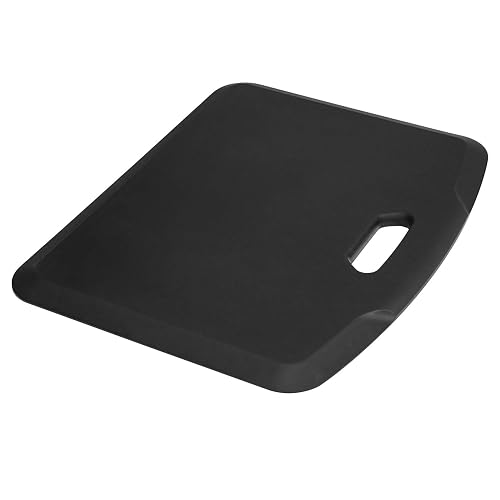
Mount-It! Anti Fatigue Floor Mat 18×22
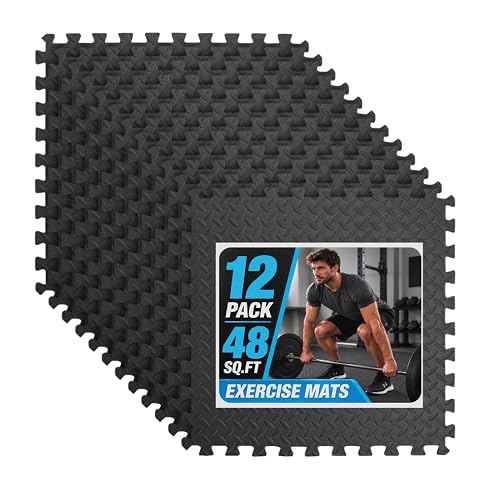
Art3d 48 Sq.Ft EVA Puzzle Exercise Mats
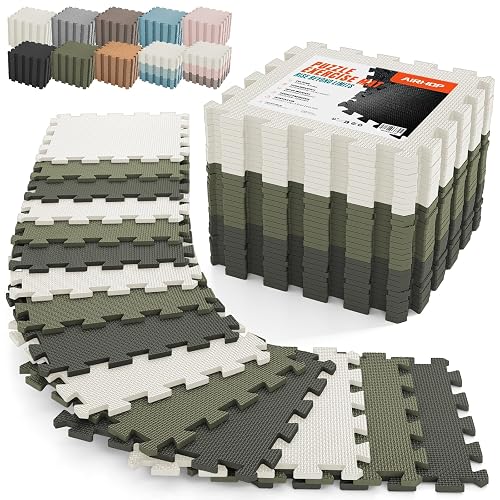
AIRHOP 18 PCS EVA Foam Gym Mat
Tyrot Extra Thick Anti Fatigue Mat 20×32
FEATOL Industrial Anti Fatigue Mat 20×39

LuxStep Water-Resistant Anti-Fatigue Mat
KitchenClouds 2PCS Anti-Fatigue Mat Set
LEEVAN Anti Fatigue Kitchen Mat Set 2PCS
A Breakdown Of The Leading Choices
Small kitchens, apartment counters, and tucked-away standing desks all share one constraint: floor space disappears fast. The Mount-It! Anti Fatigue Floor Mat solves that with an 18-by-22-inch footprint that slips in front of a single sink, prep zone, or vanity without crowding foot traffic.
It belongs in the Home & Kitchen aisle, but the use case stretches further. Anyone running a salon chair, a workshop bench, or a standing-desk converter benefits from the same compact cushion. For your first anti-fatigue mat, this is a low-commitment starting point that doesn’t dominate the room.
Everyday Perks
- Small footprint suits galley kitchens and tight workstations where larger mats won’t fit.
- Lightweight build makes it easy to roll up and store when you need the floor clear.
- Transitions cleanly between kitchen, home office, and craft room without special installation.
Worth Noting
- The narrower 18-by-22 size leaves your step uncovered when you shift sideways during longer prep sessions.
- Thinner construction compresses faster under heavier shoes, so expect a flatter feel after a year of daily use.
Right Fit For
Apartment cooks and remote workers with limited floor space who need a portable standing mat.
Swap It Out When
You want full-coverage cushioning in front of a wider cooktop, in which case the LuxStep Water-Resistant Anti-Fatigue Mat covers more ground.
Most anti-fatigue mats treat comfort as a personal island. The Art3d 48 Sq.Ft EVA Puzzle Exercise Mats flip that script with a modular system: twelve interlocking tiles, each 24 inches square and a half-inch thick, that click together to form a custom floor.
That makes this pick the natural choice for a home gym, a basement workout corner, or a garage fitness zone. The foam density (EVA, a closed-cell rubber-foam blend) absorbs dropped dumbbell impacts and cushions joint-heavy moves like lunges, mountain climbers, and stretches, all while protecting the subfloor beneath.
A Favorable Mix
- Twelve tiles cover 48 square feet, which is enough for a treadmill, a bench, and a stretching zone in one room.
- The half-inch thickness cushions knees during floor exercises and absorbs vibration from cardio equipment.
- Interlocking edges let you reshape or expand the layout when your equipment changes.
- EVA foam wipes clean with a damp cloth after sweaty sessions.
Trade Offs
- The seams between tiles can trap sweat and small debris, so you’ll want to lift and clean underneath periodically.
- Open-cell foam edges may compress differently than a single-piece mat, creating subtle ridges underfoot over time.
Key Advantages
Best Suited To
Home fitness enthusiasts setting up a multi-station workout space who want a floor that grows with their routine.
Another Choice May Suit
For pure kitchen or standing-desk use, the Tyrot Extra Thick Anti Fatigue Mat 20×32 delivers a softer sink underfoot without the gym-tile footprint.
Where the Art3d set above feels purpose-built for serious lifting, the AIRHOP 18 PCS Gym Floor Mat leans into versatility. Each tile measures 12.6 by 12.6 inches and 0.4 inches thick, so eighteen pieces give you smaller, easier-to-handle squares for a kids’ play area, a garage corner, or a compact home gym.
The high-density EVA construction is light enough to rearrange often, which matters when your space doubles as a parking spot. You can pull a few tiles out to create a yoga nook, then snap them back into a playmat shape by evening.
Real Benefits
- Smaller 12.6-inch tiles fit awkwardly shaped rooms and narrow garage bays better than larger formats.
- High-density foam holds up under cardio equipment, kettlebells, and even stroller traffic in play areas.
- Lightweight tiles make seasonal reconfiguration painless.
Points To Keep In Mind
- The 0.4-inch profile is thinner than the Art3d set, so it cushions less aggressively for deep joint work like kneeling stretches.
- More seams mean more places for crumbs and pet hair to settle during day-to-day use.
Perfect Match For
Multi-purpose households that need a flexible floor for workouts, playtime, and parking without committing to one layout.
Reach For A Different Pick When
You want a denser, single-piece cushion for a kitchen, in which case the Tyrot Extra Thick Anti Fatigue Mat 20×32 is the better fit.
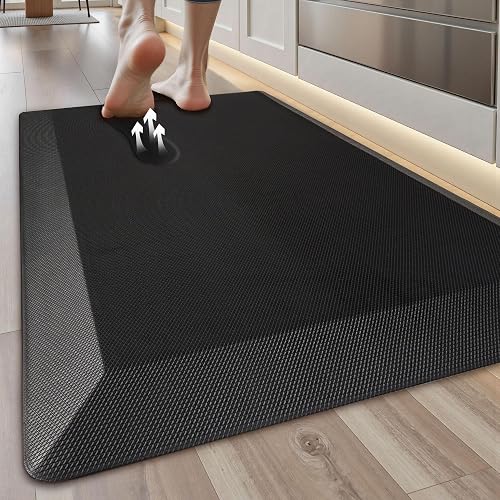
Anyone who finishes a long cook with aching heels knows that a quarter-inch of generic foam doesn’t cut it. The Tyrot Extra Thick Anti Fatigue Mat goes the other direction: 9/10 of an inch (about 23 mm) of memory foam, layered into a 20-by-32-inch standing surface that genuinely sinks under your step.
The black cover reads understated, so it disappears visually in most kitchens. The non-slip base and waterproof surface suit the realities of cooking: spills wipe up, and the mat doesn’t skate across tile when you pivot from sink to stove.
What Earns Its Place
- 9/10-inch memory foam delivers a noticeably deeper sink than the average kitchen mat.
- 20-by-32-inch coverage handles sink-to-stove transitions without leaving you mid-air on tile.
- Waterproof surface stands up to splashes and frequent wipe-downs in active kitchens.
- Non-slip backing grips tile, laminate, and hardwood in most households.
Honest Caveats
- The extra thickness creates a slight trip edge at doorways, so you’ll want to lay it where there’s a clear step-in zone.
- Memory foam can hold indentations from shoes or stools over time, which is normal but worth knowing upfront.
Key Product Details
Who It Suits Best
Home chefs and parents who stand for 60-plus minutes at a stretch and want real cushion underfoot.
Where Another Pick Suits Better
Workshop users needing wide coverage should look at the FEATOL Industrial Anti Fatigue Mat 20×39, which spans a longer stretch of standing space.
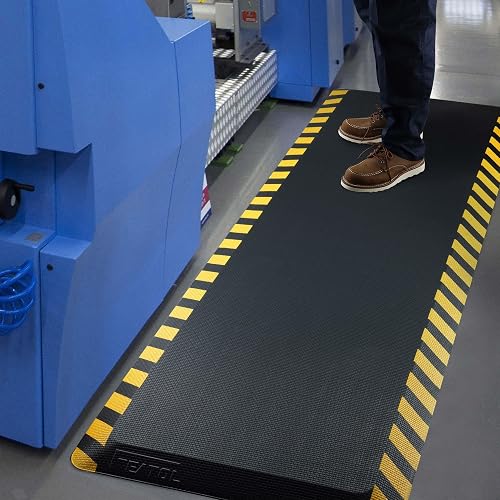
Garages, workbenches, and standing-desk setups share one trait: the work surface stretches long. The FEATOL Anti Fatigue Mat Industrial answers with a 20-by-39-inch platform and a 9/10-inch high-density memory foam core, the same thickness family as the Tyrot above but built for longer lateral reach.
The yellow border isn’t just visual flair. It defines the standing edge clearly, so you know where the mat ends in a busy shop. For anyone whose feet leave the cushioned zone two or three times an hour, that visual cue is more useful than it sounds.
Where It Helps
- 39-inch length spans a long stretch of workbench or standing desk without forcing mid-step resets.
- High-density memory foam resists permanent compression under heavy boots and prolonged standing.
- Yellow safety border improves visibility in dim garages and workshops.
- Ergonomic profile targets the foot, knee, and lower-back fatigue chain during long sessions.
Possible Compromises
- The larger footprint is harder to relocate frequently, so plan its spot before unrolling.
- Industrial styling reads more “shop” than “kitchen,” which may not fit every home aesthetic.
Feature Rundown
Made For
DIYers, woodworkers, and standing-desk users who want workshop-tough cushioning that covers a long working zone.
Not Your Match When
You want softer visual styling for a finished kitchen, in which case the LuxStep Water-Resistant Anti-Fatigue Mat blends in more easily.
Kitchens are the messiest room in most homes, so an anti-fatigue mat that can’t handle a splash is a short-term purchase. The LuxStep Kitchen Mat is built around water resistance, pairing a soft PVC foam core with beveled edges and a non-slip base tuned for tile and laminate floors.
It belongs in the Home & Kitchen aisle, and the design choices reflect that. The beveled edges reduce trip risk where the mat meets the floor, and the surface wipes down in seconds after a spill. For most households, that low-maintenance angle is the real selling point.
Standout Benefits
- Water-resistant surface keeps the foam core dry during spills and frequent wipe-downs.
- Beveled edges reduce trip risk, which matters when the mat sits near fridge or pantry doors.
- Non-slip base grips smooth kitchen floors without sliding during pivots at the sink.
- PVC foam cushioning supports long standing sessions without the bulk of memory foam.
Soft Spots
- PVC foam compresses faster than high-density memory foam under heavier shoes.
- Single-piece design means you may want a second mat to cover both sink and stove zones.
Who Should Grab It
Busy household kitchens where spills, splashes, and frequent cleaning are the daily reality.
Look Elsewhere When
You want a two-mat solution for sink and stove in one purchase, in which case the LEEVAN Anti Fatigue Kitchen Mat Set 2PCS covers both zones.
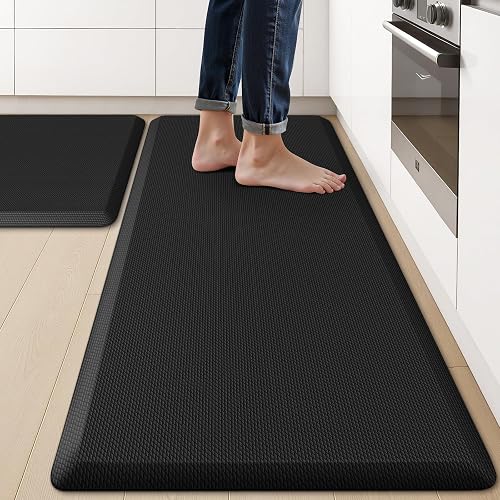
One mat covers the sink. The other catches the stove zone. The KitchenClouds 2PCS Kitchen Rugs set ships with two memory foam pieces, one 17.3 by 47 inches and one 17.3 by 29 inches, sized to flank a typical galley or L-shaped kitchen without overlapping awkwardly.
The longer runner tucks naturally in front of a sink-and-counter run, while the smaller piece sits at the stove. Together they create a continuous cushioned path, so you stop hopping off bare tile when you pivot between prep and cook.
Everyday Wins
- Two-piece layout covers sink and stove zones without one oversized mat blocking doors.
- Memory foam core gives a soft sink for feet during multi-hour cooking sessions.
- Runner-style long mat doubles as a hallway rug in utility spaces when not in the kitchen.
Less-Strong Areas
- The two-piece design requires alignment to look intentional, so it takes a few minutes to position.
- Long runner edges can curl slightly in the first weeks, depending on floor type and humidity.
Feature Card
Right Fit For
Home cooks with a longer kitchen layout who want a mat at every standing zone instead of one large piece.
Consider Something Else When
Your kitchen is a small single-wall galley, in which case the Mount-It! Anti Fatigue Floor Mat 18×22 keeps things minimal.
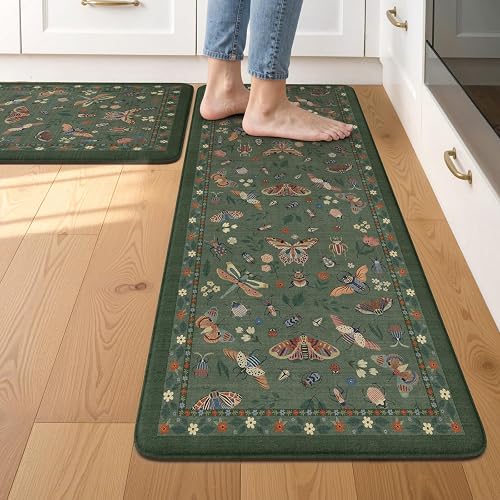
The LEEVAN Anti Fatigue Kitchen Mats set takes a similar two-mat approach to the KitchenClouds above but leans into a softer memory foam feel at 0.47 inch thick. That’s slightly less than the Tyrot’s 0.9-inch profile but spread across two coordinated pieces, the cushioning stays consistent across the busiest parts of the kitchen.
The non-slip rubber backing grips tile and laminate in most households, and the cushioned feel softens the blow on knees when little ones drop cups at dinner time. For families cooking three meals a day, that combination tends to matter more than any single spec.
Positive Points
- 0.47-inch memory foam balances cushion with stability, so you don’t feel wobbly while chopping.
- Two-mat set covers sink and stove without one oversized piece dominating the room.
- Non-slip rubber base stays put during quick pivots and kid traffic.
Room For Improvement
- The 0.47-inch thickness sits between basic and premium tiers, so heavier shoes may still feel the floor over time.
- Two-piece alignment matters: without care, the mats can shift relative to each other during the week.
Best Suited To
Family kitchens with steady daily cooking and a mix of adult and child traffic that benefits from softer floors.
A Better Fit Elsewhere
For deeper cushioning at a single standing station, the Tyrot Extra Thick Anti Fatigue Mat 20×32 puts more foam under one foot.
What To Weigh Before Choosing Your Anti-Fatigue Mat
Match Thickness To How Long You Stand
Thickness, measured in inches or millimeters, is the most direct driver of comfort. Anything around 3/8 inch handles light standing at a vanity or craft table. For real relief during 60-plus-minute cooking sessions or long workshop days, look for 9/10 inch (around 23 mm) of memory foam, which you’ll find on the Tyrot and FEATOL picks above. Going thicker than that can feel unstable on hard floors, so the sweet spot depends on your stance and shoe type.
Single Mat vs. Two-Piece Coverage
One large mat looks clean but doesn’t always fit a kitchen’s workflow. A galley layout with a sink at one end and a stove at the other usually needs a runner-plus-mat combo, which is why two-piece sets like the KitchenClouds and LEEVAN options exist. Measure both standing zones before deciding, since gaps between mats mean your foot lands on hard floor every time you pivot.
Surface Material And Cleaning
PVC foam wipes clean and resists water, which is why the LuxStep works in splash-heavy kitchens. Memory foam feels softer underfoot but needs a waterproof top layer to survive spills over time. EVA foam (used in the Art3d and AIRHOP gym tiles) handles sweat and impact better, but its seams trap debris, so factor in periodic lifting and cleaning.
Footprint And Edge Design
Beveled or tapered edges reduce trip risk, which matters anywhere the mat meets a doorway. A flat-cut 3/4-inch edge can catch a toe, especially in low light. If you want maximum thickness, position the mat away from high-traffic transitions where that edge becomes a hazard.
What Sets These Picks Apart
Where Shoppers Go Wrong
The most common mistake is buying a thin, decorative rug and expecting anti-fatigue comfort. A standard kitchen rug is built for visual appeal, not joint relief, and usually tops out around 1/4 inch of felt or fabric. The picks in this roundup start around 0.4 inch and go up to 9/10 inch for a reason: real cushion requires real material depth.
Another trap is choosing a mat that’s too small for the way you actually move. Standing at a single spot is rare in a kitchen, so measure your full working zone, not just the spot directly in front of the sink.
When Paying More Pays Off
Premium-tier mats in this category invest in three things: thicker high-density memory foam, waterproof top layers, and non-slip bases that grip smooth floors. The Tyrot and FEATOL both deliver that combination, and the upgrade shows up most during long sessions where cheaper foam compresses permanently.
For lighter use, a thinner PVC mat at a friendlier price is plenty. The premium tier earns its place when you stand for two or more hours daily and want the mat to keep its shape year after year.
Frequently Asked Questions
How thick should an anti-fatigue mat be?
For most kitchen and standing-desk use, look for at least 3/8 inch of foam as a baseline. If you stand for more than an hour at a stretch, 9/10 inch of memory foam makes a noticeable difference in heel and lower-back comfort.
Are puzzle foam mats good for standing desks?
Puzzle mats like the Art3d and AIRHOP sets work for standing desks, but they’re optimized for workout impact, not daily step-by-step standing. A single-piece memory foam mat usually feels more stable underfoot for office-style standing work.
Can anti-fatigue mats go on hardwood floors?
Yes, most non-slip-backed mats grip hardwood without damage, but always check that the base is rubber or a similar grippy material rather than PVC, which can sometimes mark finished wood over time.
How do I clean a foam anti-fatigue mat?
Wipe the surface with a damp cloth and mild soap for everyday spills. For deeper cleans, most memory foam mats should not be machine-washed, since soaking the foam core can damage the structure. Always check the product page for care specifics.
Do anti-fatigue mats actually help with back pain?
Many people report reduced lower-back discomfort after switching to cushioned standing surfaces, since the foam encourages subtle micro-movements that engage calf and core muscles. They support better posture, but they aren’t a substitute for ergonomic seating or professional medical advice.
Closing Remarks
The right mat depends less on specs and more on where you stand, how long, and what your floor looks like underneath. A compact Mount-It! pad solves a tight apartment kitchen, a Tyrot or FEATOL handles serious daily standing, and an Art3d tile set builds out a home gym floor. Measure your space, think about spills and traffic, and pick the profile that matches your real routine.