


You step through the door juggling groceries, rain boots, and a leashed dog, and within a single day your hallway floor tells the whole story. A good indoor mat absorbs the muddy evidence before it reaches your hardwood, catches the grit that would otherwise sandpaper your finish, and gives your entryway a little visual warmth while it’s at it. The eight mats below cover the main styles you’ll run into: low-profile runners, rubber-backed trappers, decorative washable rugs, and commercial-grade rubber for high-traffic households.
The Main Contenders
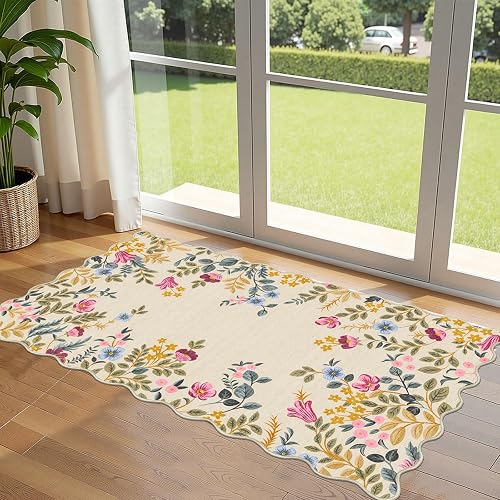
Othilic Beige Floral Washable Layered Doormat
OLANLY Waterproof Heavy-Duty Doormat
BEQHAUSE Dirt Trapper Half Circle Mat (Green)
MontVoo Absorbent Rubber Doormat (Grey Brown)
MontVoo Absorbent Rubber Doormat (Navy Blue)
MaxMat Durable Rubber Door Mat (Green, 3×5)
MaxMat Commercial Rubber Border Door Mat (Red)
BEISIFLOOR Ultra Thin Herringbone Doormat (Light Blue)
A Deeper Look At The Lineup
If your entryway leans more cottagecore than utility closet, this Othilic mat leans into the decorative side. A botanical print and scalloped border give it a vintage feel that works with farmhouse, French country, or coastal styling, and the synthetic fiber build stands up to outdoor use on a covered porch.
At roughly 2 by 4.3 feet, it covers a standard single-door threshold without overwhelming a narrow wall. Unlike the rubber-forward picks later in this list, this one prioritizes looks. Pair it with a hidden scraper mat underneath for households that see real mud, and treat the washable construction as the main cleanup story: shake, rinse, lay flat to dry.
Practical Pluses
- Washable synthetic fibers handle routine hose-downs and keep colors from fading under porch cover
- Layered styling lets you stack it over a plain scraper for a designer look with real function
- Scalloped border and botanical print add personality in entryways where plain mats feel sterile
- Lightweight enough to lift with one hand when sweeping underneath
Things To Consider
- Fabric construction absorbs water and dries slower than rubber, so avoid leaving it soaked overnight
- Less aggressive scraping than the rubber-backed picks, so very muddy boots may track past it
- Pattern hides everyday dust well, but lighter tones can show ground-in soil between washes
Feature Snapshot
Made For
Homeowners decorating a cottage, farmhouse, or coastal entryway who want a mat that doubles as decor and still handles covered outdoor duty.
Skip It When
You live somewhere with daily mud or snow; the OLANLY Waterproof Heavy-Duty Doormat absorbs that reality much better.
The OLANLY mat is built around grip. A high-density natural rubber backing (a sturdy, grippy base layer) holds the mat in place on tile, vinyl, and sealed hardwood, and the woven polyester face pulls dirt and moisture off shoes before it crosses the threshold.
This is the mat to reach for when the weather is the problem, not the decor. Compared with the decorative Othilic that opened the list, the OLANLY is all function, with a low-profile build that won’t fight a swinging door. For households in rainy or snowy regions, the rubber foundation also helps protect floors from the kind of seepage that warps wood over time.
The Upside
- Natural rubber backing grips hard surfaces and resists sliding under foot traffic
- Woven polyester face scrapes debris and holds moisture, keeping floors drier
- Heavy-duty construction tolerates daily shoe traffic and indoor or covered outdoor placement
- Low profile clears most standard door swings without trimming
Points To Note
- Plain visual style does not decorate an entryway the way the Othilic floral mat does
- Rubber backing can occasionally mark light vinyl floors; test a corner before committing
Right Fit For
Shoppers in wet, muddy, or snowy climates who want a non-slip mat that prioritizes floor protection over visual flair.
A Better Fit Elsewhere
If you’d rather make a decor statement, the Othilic Beige Floral Washable Layered Doormat serves a more styled entryway.
Not every entry has room for a rectangle, and that’s where the half-circle BEQHAUSE earns its place. The curved back hugs a door’s swing arc, so the mat sits flush against the threshold without forcing guests to step around it. Dense polypropylene yarns scrape and hide debris between cleanings.
Available in two semicircular footprints (roughly 1’5″ x 2’6″ and 2’2″ x 3’4″), this mat suits side doors, garage entries, and small foyers where a full rectangle would cramp the path. Mix-and-match tones hide everyday dust, which matters when the mat is small and the entry sees daily traffic.
Features That Help
- Semicircular shape fits tight entries and side doors where a rectangle won’t work
- Stain-resistant polypropylene yarns hide dirt and shrug off muddy shoes
- Two size options let you match the mat to a small or wider doorway
- Curved back follows the door swing, so the mat stays out of the walking path
Trade Offs
- Smaller footprint means less coverage for households that drag in wide debris zones
- Half-circle silhouette does not pair as well with rectangular layering as the Othilic does
Best Suited To
Apartment dwellers and homeowners with side entries, back doors, or narrow foyers where a rectangle simply will not fit.
Look Elsewhere When
You need wide coverage for a busy main door; the MaxMat Durable Rubber Door Mat (Green, 3×5) covers a much larger area.
The MontVoo in grey brown leans into the daily-grind category: a soft, absorbent face that soaks up water, mud, and snowmelt, plus a non-slip rubber base that keeps it planted under hurried feet. At 17 by 30 inches, it fits a single-door landing without dominating a small entryway.
The scraper-textured top layer is the unsung hero here. It pulls grit off shoe treads and hides it in the pile, so the mat keeps looking clean between weekly shake-outs. For families with kids running in from the yard, the soft face is a kinder landing than the hard rubber picks later in the lineup.
Strong Points
- Soft, absorbent surface handles wet shoes and damp boots without pushing water onto floors
- Scraper texture grips shoe treads and traps debris in the pile, hiding it from view
- Non-slip rubber backing keeps the mat planted during fast foot traffic
- Neutral grey brown tone disguises everyday dirt between cleanings
Worth Noting
- Plush face holds moisture, so the mat needs time to dry between wet-weather days
- Smaller 17 x 30 inch footprint may feel tight for households with wide double-door entries
Key Product Details
Whose Entry It Belongs In
Families with kids and pets who want a soft, absorbent mat that holds up to daily in-and-out traffic without sacrificing grip.
Where Another Pick Suits Better
You need a mat for a garage or shop floor; the MaxMat Commercial Rubber Border Door Mat handles oily, wet concrete much better.
Functionally identical to the grey brown MontVoo above, this navy version simply swaps the palette. The same soft absorbent face, scraper-textured top, and rubber non-slip base carry over. The deeper color is the only real difference, and for many households that’s a meaningful one.
Navy reads cleaner in homes with cool-tone flooring, and it masks pet hair better than the lighter grey brown. If you’re choosing between the two MontVoo options, think about which tone hides your specific mess best. The build, the size, the maintenance routine: all the same.
Everyday Perks
- Navy tone hides pet hair and lint that lighter mats show after one pass
- Same absorbent, scraper-textured face as the grey brown sibling
- Rubber backing keeps the mat anchored on tile, vinyl, and sealed hardwood
Honest Caveats
- Deep color can fade under direct sun if used on an uncovered porch
- Same 17 x 30 inch footprint as the grey brown: tight for double-door entries
Who Will Love This
Pet owners and busy households who want the same soft, absorbent build as the grey brown, but with a tone that masks fur and lint.
Another Choice May Suit
If you need something more decorative, the Othilic Beige Floral Washable Layered Doormat brings color and pattern to the same doorway.
Once you leave the foyer and head into a garage, workshop, or covered patio, the rules change. Concrete tolerates moisture but punishes fabric, and you need a mat that shrugs off grease, water, and grit without complaining. The MaxMat green rubber mat is built for exactly that environment.
At 3 by 5 feet, it covers a wide threshold or parking pad. The all-rubber waterproof construction means you can hose it off in the driveway and let it drip-dry. It’s not a soft-surface mat, and it’s not trying to be. The trade-off is honest: harder underfoot, easier to clean, longer-lived on rough surfaces.
Benefits That Matter
- All-rubber waterproof build shrugs off moisture, grease, and road grime
- 3 x 5 foot footprint covers wide garage entries and patio doors
- Low profile clears vehicle doors and swing doors without buckling
- Hose-off cleaning fits the rough environments this mat is designed for
Some Limits To Know
- Hard rubber surface feels firm under bare feet, so it’s less comfortable in a kitchen or hallway
- Industrial styling does not match a decorated entryway
Feature Snapshot
Built With In Mind
Garage and workshop owners who need a wide, waterproof mat that takes abuse and cleans up with a hose.
Swap It Out When
You’re placing a mat inside a finished entryway; the MontVoo Absorbent Rubber Doormat feels softer underfoot and matches interior flooring better.
The red MaxMat is a step up from the green sibling above in one specific way: a reinforced rubber border that holds the mat’s shape under heavy foot traffic. The same 3 by 5 foot footprint and waterproof rubber build carry over, but the edging helps the mat resist curling and tearing at the corners, which is where most commercial mats fail first.
Red also serves a practical purpose beyond looks. In a workshop or shop entry, a bright border flags the mat’s edge so nobody catches a toe. For homeowners, the color reads as a deliberate accent rather than a stain, which is helpful in mudrooms where you’d rather not see the dirt.
A Favorable Mix
- Reinforced rubber border resists curling and edge wear in high-traffic zones
- Red color clearly marks the mat’s edge, reducing trip risk in dim entries
- Waterproof rubber build handles snowmelt, rainwater, and tracked-in debris
Worth Bearing In Mind
- Same hard rubber feel underfoot as the green MaxMat, so it is not a soft-surface option
- Bold red color may clash with some interior palettes
Perfect Match For
Workshop owners and small-business operators who want a commercial-grade mat that resists edge wear and signals the entry clearly.
Reach For A Different Pick When
You need a softer mat inside a finished room; the BEISIFLOOR Ultra Thin Herringbone Doormat keeps a low profile without the hard-rubber feel.
The BEISIFLOOR closes the list by solving one specific problem: doors that won’t clear a thick mat. The ultra-thin profile and rubber backing keep it flush with the floor, and the herringbone weave gives it texture without bulk. Light blue is a fresh alternative to the usual grey and brown that dominates this category.
Polyester face with a rubber base hits the right balance for apartment dwellers and anyone with a tight-swinging front door. It absorbs moisture and scrapes dirt just like thicker mats, and it ships rolled rather than folded, so you don’t fight corner creases on day one. For a slim mat, it covers a respectable 17 by 29 inch footprint.
Key Advantages
- Ultra-thin profile clears low-clearance doors that fight thicker mats
- Herringbone weave adds texture and visual interest without bulk
- Rubber backing grips smooth floors and resists sliding under foot traffic
- Polyester face handles everyday moisture and dirt without heavy maintenance
A Few Limitations
- Slim profile leaves less pile to absorb standing water from very wet boots
- Light blue tone will show ground-in soil faster than darker mats in the same category
Who Should Grab It
Apartment dwellers and homeowners with low-clearance doors who need a slim mat that still scrapes and absorbs effectively.
Not Your Match When
You deal with heavy daily mud; the OLANLY Waterproof Heavy-Duty Doormat has a thicker pile for that workload.
Choosing Indoor Mats That Fit Your Space
The right mat starts with the doorway, not the catalog. Measure the swing arc first, then the floor space, because a mat that fights a door gets pushed aside within a week. For most standard single doors, 17 by 30 inches clears the threshold without crowding the wall, while wider double-door entries benefit from a 3 by 5 foot mat that covers the full path.
Material matters as much as size. Rubber-backed mats grip smooth floors and resist sliding, which matters in homes with kids, pets, or anyone in a hurry. Soft fabric faces absorb moisture and feel kinder under bare feet, but they dry slower and need more frequent washing. All-rubber mats handle the rough end of the spectrum: garages, workshops, and covered patios where you’d rather hose than vacuum.
Style should serve the room, not the other way around. A decorative mat earns its place in a styled entryway, but it needs a working partner underneath if your climate drags in real mud. For most households, a two-mat system (an outdoor scraper plus an indoor absorber) handles the seasons better than a single mat asked to do both jobs.
Key Considerations Across These Picks
Where Shoppers Go Wrong
The most common mistake is buying for the catalog photo instead of the doorway. A mat that’s too thick gets crumpled under a low-clearance door within days, and a mat that’s too small ends up in the corner while shoes track past it. Measure first, then shop. Another trap is trusting the price tag to predict performance: a cheap fabric mat can outlast a mid-tier rubber mat in a dry climate, while the same cheap mat falls apart in a wet entryway within a season.
Where The Extra Money Goes
Higher-tier mats in this category earn their keep through material density and edge construction. Reinforced rubber borders, denser weaves, and natural rubber backing all show up where mats actually fail: the edges, the corners, and the underside. For low-traffic entries, a basic mat handles the workload fine. For mudrooms, workshops, and households with multiple pets, the upgrade pays back in fewer replacements and less floor damage over time.
Frequently Asked Questions
How often should an indoor mat be cleaned?
Shake out or vacuum loose debris weekly, and deep-clean the mat itself every two to four weeks depending on traffic. Fabric mats can usually be machine-washed or hosed off, while rubber mats rinse clean in the driveway.
What size mat works for a standard front door?
A 17 by 30 inch mat covers most single-door thresholds with a few inches to spare on each side. Wider double-door entries usually need a 3 by 5 foot mat or two single mats side by side.
Can indoor mats be used on hardwood floors?
Yes, but check the backing first. Natural rubber and felt-backed mats grip well without staining most sealed hardwoods. Avoid PVC backings on freshly finished floors, since they can leave marks over time.
Do rubber-backed mats slide on tile?
Quality rubber-backed mats grip tile well, especially when the surface is dry. On highly polished porcelain or wet tile, look for mats with high-density natural rubber rather than thin synthetic backing.
How long does a typical indoor mat last?
In a low-traffic entry, a well-made mat lasts several years. In a busy mudroom or garage, expect one to three years before the backing or surface shows enough wear to justify replacement.