

A rug that slides every time you step on it isn’t just annoying; it’s a real slip hazard for kids, pets, and anyone wearing socks on hardwood. The right rug pad changes that, absorbing noise, cushioning tired feet, and keeping the rug in place through daily traffic. The wrong one bunches, discolors the floor, or falls apart in a year. This shortlist covers eight pads built for very different setups, from a thick felt layer for chilly bedrooms to a thin gripper for kitchens and hallways.
The Shortlist At A Glance
TJWODO Non Slip Rug Pad 9×12 Feet Extra Thick
Durahold Plus Felt and Rubber Rug Pad
Songrey Non-Slip Rug Pad 5×7 FT
Yxzhyaba Waterproof Rug Pad 7×10 ft
BAGAIL BASICS Rug Pad Gripper 8 x 10 FT
RUGPADUSA Nature’s Grip Rubber and Jute Pad
Veken Felt Cushioned Rug Pad 8 x 10 FT
Mohawk Home Non Slip Grip Rug Pad 9×12
The Strengths Of Each Pick
Large living rooms with oversized area rugs need a pad that covers ground without bunching at the edges, and the TJWODO Extra Thick pad steps in for that exact job. The 9×12 foot footprint matches standard room-sized rugs, so you can lay it down without trimming strips to fill gaps. The extra-thick profile adds noticeable softness underfoot on hardwood, which matters in rooms where you stand often, like a reading nook or a TV area.
Open-weave construction is a quiet perk that pays off over time. Air moves through the pad, helping the rug breathe, and vacuuming stays simple since the vacuum head doesn’t seal against a sealed foam surface. The non-skid grip holds the rug steady on smooth wood floors, reducing the constant readjustment that thinner pads often require.
What Helps Most
- 9×12 ft coverage suits common large area rugs
- Extra-thick build cushions hardwood floors noticeably
- Non-slip grip keeps rugs from creeping in doorways
- Open-weave design supports airflow and easier vacuuming
- Resilient foundation helps extend rug lifespan by absorbing daily wear
Things To Consider
- Extra thickness can interfere with low-clearance doors in some rooms
- Large size means heavier handling during installation
- May need trimming to fit oddly shaped rugs exactly
Feature Snapshot
Right Fit For
Homeowners with a large 9×12 area rug over hardwood who want a simple, full-coverage pad without trimming or piecing sections together.
Consider Something Else When
The Mohawk Home 9’x12′ Non Slip Grip Rug Pad is a better call if door clearance is tight and you need a thinner profile under a rug in a high-traffic hallway.
The Durahold Plus has earned a long track record in the rug pad world, and the combination of felt with natural rubber explains why. The needle-punched felt construction (felt fibers mechanically tangled rather than glued) keeps the pad from breaking down the way cheaper glued pads do, so you avoid the powdery residue that sometimes shows up under rugs after a couple of years. Natural rubber grips hardwood without aggressive adhesives.
On real hardwood floors, the rubber side holds the pad in place, while the felt side cushions the rug above. Compared to the TJWODO Extra Thick pad from earlier, this one focuses on long-term durability and a more traditional felt-and-rubber build, rather than thick foam-style cushioning. It’s the kind of pad you install once and forget about.
The Case For It
- Natural rubber grips hardwood without harsh adhesives
- Needle-punched felt resists shredding over time
- Reduces mildew and odor buildup under rugs
- Provides sound absorption that softens footstep noise
- Made in the USA, with materials that are gentler on flooring finishes
Points To Note
- Not the thickest option if plush underfoot feel is the top priority
- Should be trimmed slightly smaller than the rug to stay hidden
- Natural rubber smell may linger briefly out of the package
Who It Suits Best
Homeowners who want a long-lasting, well-made pad for hardwood floors and care more about durability than extra cushion thickness.
Look Elsewhere When
The Veken Felt Cushioned Rug Pad suits you better if the rug is anchored by heavy furniture and you want a noticeably thicker, plusher under-rug feel.
Mid-size rugs in busy rooms, like the one under your coffee table or the runner by the back door, take a beating from kids and pets. The Songrey pad focuses on that mid-size category with a 5×7 footprint that fits many common area rugs. The dual-sided grip design means it locks against the floor below and the rug above, which helps prevent the bunching that sends small feet flying.
Compared to the Durahold Plus reviewed earlier, the Songrey skips the heavy felt-and-rubber build for a lighter dual-grip format. The result is easier handling during installation, which matters when you’re wrestling a pad into place in a tight living room. For households where a slipping rug is a daily safety concern, the dual grip is the feature you’ll appreciate most.
Everyday Perks
- 5×7 ft fits many common area rugs without trimming
- Dual-sided grip holds both floor and rug in place
- Helps prevent bunching in high-traffic zones
Small Caveats
- Thinner build than felt-only pads, so less plush cushioning
- May not suit very large rugs outside its listed size range
Made For
Families with kids or pets who need a reliable mid-size grip pad for a 5×7 rug in a kitchen, playroom, or busy living space.
Swap It Out When
The TJWODO Extra Thick pad is the stronger choice for very large room-sized rugs where full 9×12 coverage matters more than dual-grip technology.
Spills and pet accidents happen, and most rug pads absorb that moisture into the felt layer where it sits and causes problems. The Yxzhyaba pad tackles that with a waterproof TPR (thermoplastic rubber) construction paired with felt on top, creating a barrier between any liquid and the floor below. For dining rooms, mudroom-adjacent rugs, or homes with newly housebroken puppies, that waterproof layer earns its keep quickly.
Versus the Songrey reviewed just before, this one trades pure grip focus for moisture protection. The 7×10 size lands in the popular large-rug zone, just below the room-sized 9×12 picks. If your main concern is keeping liquid from reaching hardwood or laminate, the waterproof TPR is the feature that separates this from a standard felt pad.
The Helpful Details
- Waterproof TPR backing blocks liquid from reaching the floor
- Felt top layer adds underfoot softness and sound absorption
- 7×10 ft suits large living room or bedroom rugs
- Works across different floor types and finishes
Points To Keep In Mind
- Pad only, area rug not included
- Waterproof barrier can feel stiffer than pure felt pads
- Less grippy on slick vinyl than rubber-backed options
Best Suited To
Pet owners and households with frequent spill risk who want a moisture-blocking layer under a 7×10 rug in a dining area or family room.
Not Your Match When
The Songrey Non-Slip Rug Pad is a better fit for 5×7 rugs in pet homes where dual-sided grip matters more than full waterproofing.
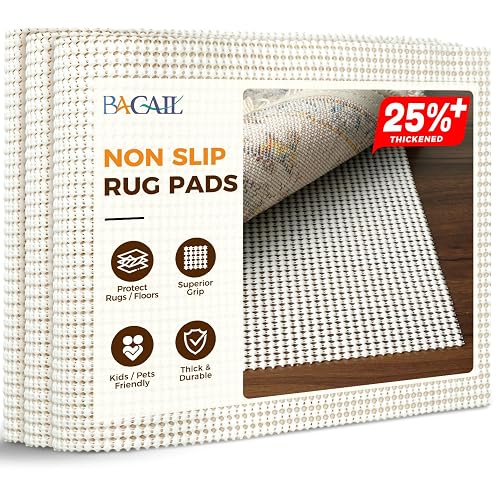
Tight budgets don’t have to mean thin, useless rug pads. The BAGAIL BASICS gripper brings a generous 8×10 footprint at an entry-level price point, with an extra-thick build that punches above what you’d expect. The grip works on hardwood and tile, two of the most common floor types, and the same material can double as a drawer liner or shelf mat in a pinch.
Compared to the Yxzhyaba pad reviewed above, this one skips the waterproof barrier and focuses purely on grip and cushion. The 8×10 size slots between the popular 5×7 and the room-sized 9×12 formats, making it useful for a wide range of common area rugs. For first-time pad owners, the multi-use versatility is a practical bonus.
Notable Gains
- Extra-thick construction softens hardwood underfoot
- 8×10 ft size fits many common area rugs
- Doubles as drawer liner or shelf mat
- Shields hardwood and tile from scratches
Trade Offs
- No waterproof layer for spill-prone rooms
- Padding may compress under very heavy furniture over time
- Edge trimming required for unusual rug shapes
Quick Facts
Who Will Love This
Budget-focused shoppers covering an 8×10 rug on hardwood or tile who want grip and cushion without paying for premium materials.
Reach For A Different Pick When
The Yxzhyaba Waterproof Rug Pad makes more sense for pet homes or dining areas where blocking spills from reaching the floor is the priority.
Synthetic PVC rug pads can off-gas and leave marks on certain hardwood finishes, which is exactly the problem RUGPADUSA built Nature’s Grip to solve. The pad pairs natural rubber with hand-woven organic jute fibers, two materials that grip well without harsh adhesives. The 1/16 inch profile keeps the rug low to the floor, which is helpful for doors that barely clear a flat rug already.
Where the BAGAIL BASICS reviewed earlier emphasizes thickness, this one leans into material purity and a thin footprint. The natural rubber grips by friction rather than sticky residue, so removing the pad later doesn’t risk pulling finish off the floor. For households with young kids who crawl on the floor, the absence of harsh adhesives is a meaningful upgrade.
Strengths Worth Knowing
- Natural rubber grips without aggressive adhesives
- Organic jute fibers add an eco-friendly material layer
- Thin 1/16 inch profile clears most doorways easily
- Safe for hardwood, tile, and other floor finishes
Honest Caveats
- Minimal cushioning compared to thick felt pads
- Jute scent may be noticeable when first unrolled
Perfect Match For
Eco-conscious households and parents looking for a low-profile, non-toxic pad under a rug in a nursery, living room, or sensitive-floor environment.
A Better Fit Elsewhere
The Veken Felt Cushioned Rug Pad suits you better if you want noticeable plush cushioning underfoot and don’t need a low-clearance profile.
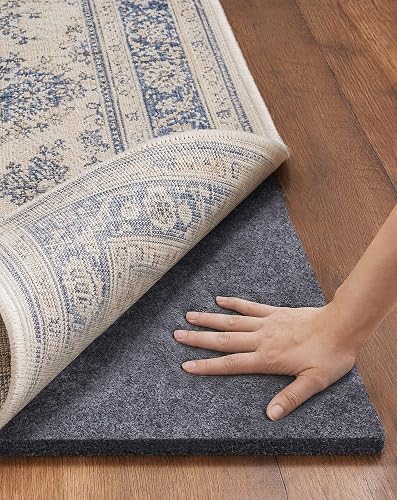
Some rugs already stay put because a heavy couch or bed sits on them, and a non-slip backing becomes unnecessary. The Veken Felt Cushioned pad is designed for that exact scenario, and the 1/4 inch thickness adds a noticeable layer of plush underfoot comfort. The dense needle-punched felt is built from fibers that hold up under repeated compression without going flat quickly.
Versus the RUGPADUSA Nature’s Grip reviewed just before, this pad trades the thin low-profile build for serious cushioning. The trade-off shows up in doorway clearance, which is something to measure before committing. For bedrooms and living rooms where the rug is anchored by furniture, the plusher feel is the main reason to pick it.
Reasons It Performs
- 1/4 inch thick adds plush, supportive cushioning
- Dense felt construction resists compression over time
- Works well under rugs anchored by heavy furniture
- Adds sound absorption and insulation in cold rooms
Practical Considerations
- Not designed as a non-slip pad on its own
- 1/4 inch thickness may block low-clearance doors
Who Should Grab It
Anyone placing a pad under a heavy, furniture-anchored rug who values cushioning and sound absorption over grip technology.
Skip It When
The Mohawk Home Non Slip Grip Rug Pad is the better call for runners or thin rugs in doorways where both grip and a slim profile are required.
Hallways, entryways, and other high-traffic zones are where most rug pads either prove their worth or fail. The Mohawk Home pad is built for that environment, pairing a low-profile 1/8 inch felt cushion with a non-slip latex backing that grips both rug and floor. The thin profile is the real story, since thicker pads tend to catch on shoes and create tripping edges in busy spots.
Compared to the Veken Felt Cushioned pad reviewed just above, this one goes the opposite direction, slim instead of plush, and grip-focused instead of cushion-focused. The dual-surface design (felt on one side, rubber on the other) is a classic approach that works across hardwood, tile, and laminate. For a household where the rug shifts a dozen times a day, the consistent grip is what you’ll notice most.
Good Reasons To Consider
- Low 1/8 inch profile clears most doorways
- Non-slip backing grips rug and floor simultaneously
- 9×12 ft size suits large area rugs
- Safe for all common floor types
Less Ideal Details
- Thin profile means less plush cushioning than felt-only pads
- May show wear faster in extremely high-traffic entries
Feature Card
Right Fit For
Busy households that need a slim, grippy pad under a large 9×12 rug in a hallway, entryway, or other high-traffic area where doors barely clear.
Where Another Pick Suits Better
The TJWODO Non Slip Rug Pad is the stronger choice for large living rooms where extra-thick cushioning matters more than a slim doorway-friendly profile.
Picking The Right Pad For Your Floor And Lifestyle
Material And Floor Type Pairings
Natural rubber grips hardwood and tile without the off-gassing concerns that some PVC pads carry, while needle-punched felt adds cushioning that foam often lacks. Hardwood floors generally benefit from breathable pads, since trapped moisture under a sealed pad can cloud the finish over time. Tile and laminate handle most pad types well, though waterproof backing helps in kitchens where splashes are routine.
Size, Thickness, And Door Clearance
A pad should sit roughly one inch shy of the rug on each side, so the pad stays hidden while the rug edge grips the floor. Measure door clearance before buying a thick pad; anything over 1/4 inch tends to catch on shoe heels and create trip edges. For oversized rugs in open living rooms, thickness matters less since doors don’t usually cross them.
Cushioning Versus Grip Trade-Offs
Thicker felt pads feel plusher underfoot but grip less on their own, which is why some are paired with furniture anchoring. Thin grip pads hold rugs in place but feel almost as firm as the bare floor. Dual-surface pads, with felt on one side and rubber on the other, split the difference and work well across most rooms in a typical home.
Traffic, Pets, And Spill Considerations
Homes with pets or small children benefit from waterproof barriers, since accidents that soak into felt can cause lingering odors. High-traffic hallways and entryways wear through felt faster than closed bedrooms, so a denser felt or a rubber-reinforced pad extends the useful life. For dining areas, waterproof backing protects hardwood from the occasional dropped glass or tipped chair.
Key Considerations Across These Picks
Where Shoppers Go Wrong
The most common slip-up is buying a pad that’s the same size as the rug, when it should be an inch or two smaller in each direction so the rug edge grips the floor directly. Another trap is choosing PVC-coated pads for delicate hardwood finishes, where the plasticizer can leave a dull mark over time. Measuring door clearance before buying a thick pad also prevents the surprise of a door that no longer swings freely.
Where The Extra Money Goes
Premium pads in this category invest in natural rubber instead of synthetic PVC, needle-punched felt instead of glued fiber, and in some cases organic jute woven by hand. Those material choices show up in longer pad life, gentler floor contact, and reduced off-gassing in tightly closed rooms. For households with hardwood worth protecting or kids who crawl on the floor, the upgrade tends to pay back in pad longevity and peace of mind.
Frequently Asked Questions
How Thick Should A Rug Pad Be?
Most rooms work well with a pad between 1/8 and 1/4 inch, with thinner profiles for doors that barely clear rugs. Thicker pads feel plusher but can cause tripping at thresholds and catch on shoe heels in busy entries.
Will A Rug Pad Damage Hardwood Floors?
Pads made with natural rubber or needle-punched felt are generally safe for finished hardwood, while some PVC-coated pads can leave a residue over time. Choosing a breathable pad and avoiding trapped moisture helps protect the finish underneath.
How Often Should You Replace A Rug Pad?
A good pad typically lasts five to ten years, depending on traffic and material. Signs it’s time to replace include visible crumbling, lingering odors, or a pad that no longer grips even after cleaning.
Can You Use The Same Pad On Carpet And Hardwood?
Most pads are designed for hard floors underneath the rug, not for rugs placed over wall-to-wall carpet. For carpeted rooms, a separate low-profile pad is usually a better match.
How Do You Clean A Rug Pad?
Vacuuming the pad without the rug on top, spot cleaning with mild soap and water, and air-drying flat are widely recommended steps. Avoid machine washing or harsh chemicals, which can break down the rubber or felt.
The Takeaway
A good rug pad does more than stop slipping; it cushions steps, quiets rooms, and keeps both the rug and the floor in better shape over time. Match the pad’s material to your floor, its thickness to your door clearance, and its features to the room’s traffic and spill risk. With the right shortlist match, you’ll likely stop noticing the pad entirely, which is usually the sign it’s working well.