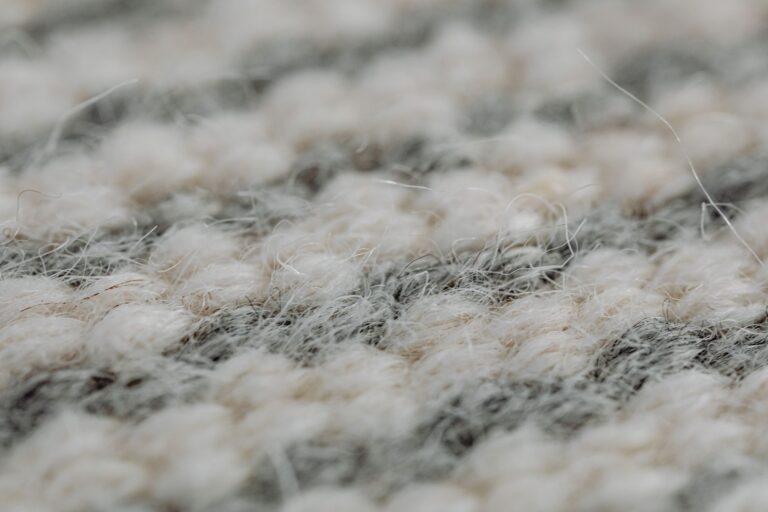


Installed directly over a concrete slab, wall-to-wall or modular soft flooring typically lasts 5 to 8 years provided the slab is dry, a true vapor barrier sits beneath the pad, and humidity stays under 60%. Skip those steps and the same carpet can turn into a mold incubator within 24 to 48 hours of a spill, seep, or summer humidity spike. The padding, the subfloor seal, and a running dehumidifier decide which outcome you get.
This guide covers what every homeowner weighing soft flooring below grade needs to know, from vapor barriers and dehumidifier targets to padding picks and lower-risk tile alternatives that survive a damp concrete slab.
Why Basement Conditions Are Tough on Carpet
Below-grade rooms sit inside a concrete shell that never stops exchanging water vapor with the surrounding soil. A bare slab behaves like a slow sponge, drawing moisture up through its pore structure through capillary action even when no liquid water is visible. The Carpet and Rug Institute (CRI) recommends moisture testing before any carpet installation in below-grade spaces, and that guidance reflects how often damp basements drive most indoor mold growth.
The Concrete Slab as a Moisture Source
Concrete is porous, and that porosity never goes away after the pour cures. Water vapor migrates from the damp earth beneath the slab, through the concrete, and into the air above, where it gets trapped under impermeable flooring. A 6-mil polyethylene vapor barrier laid across the slab is the standard defense, and DeltaFL is one of the most commonly specified underlayment membranes for this purpose. Without that barrier, even a sealed slab can push measurable amounts of water into the carpet system above.
Humidity, Dew Point, and Trapped Air
Cooler than the rest of the house, basements push the dew point closer to the indoor air temperature and invite condensation on cold surfaces. When humid summer air slips in through a window or an open stairwell, condensation can form on the cold concrete, and any carpet laid on top will hold that dampness like a towel. Keeping basement relative humidity below 60% (ideally between 30% and 50%) is the single most effective lever for protecting soft flooring in this part of the home.
Run a dehumidifier set to 50% relative humidity year-round. It costs less than replacing mold-laden carpet and protects everything stored downstairs.
The Real Risks of Moisture, Mold, and Mildew
Damp carpet feeds mold and mildew within a day or two. Once the fibers stay wet for 24 to 48 hours, colonies of Aspergillus, Penicillium, and Cladosporium can take hold, often invisibly under the padding. Spores become airborne, settle into the HVAC return, and spread allergens through the rest of the house.
How Mold Develops Beneath the Surface
Visible staining on the carpet surface is usually the last sign of a problem that started months earlier under the pad. Organic dust trapped between the carpet backing and the concrete feeds microbial colonies, and a flood history dramatically raises the chance of failure. CRI’s Green Label Plus program exists largely to limit the off-gassing and allergen load of carpet installed in sensitive spaces like basements.
Health, Odor, and Structural Clues
Musty odors that intensify on humid days are a classic red flag. So are dark spots that reappear on interior basement walls, peeling paint near the floor, or a white powdery bloom (efflorescence) on the concrete itself. Anyone with asthma or seasonal allergies will often notice symptoms that improve the moment they leave the basement, which is a strong signal the carpet system is the source.
Because the carpet itself often drives those reactions, choosing materials that resist harboring allergens becomes the next line of defense.
Carpet and Padding Types That Hold Up Below Grade
Not all carpet assemblies behave the same in a basement. The fiber, the pad, and the backing each contribute to how much moisture the system can absorb before things go wrong.
Pad and Backing Choices
Closed-cell foam and rubber padding resist water far better than traditional felt or rebond, which acts like a sponge. A waterproof backing such as the polyurethane systems used by Shaw Floors and Mohawk’s SmartStrand lines keeps liquid spills from penetrating to the pad. The pad choice matters more than most homeowners realize: a 6-pound density closed-cell rubber pad costs more upfront but prevents the slow wicking that wrecks most basement installations.
| Carpet Component | Better for Basements | Higher Risk in Basements |
|---|---|---|
| Pad material | Closed-cell foam, rubber, Dricore subfloor panels | Rebond felt, traditional foam, wool |
| Carpet fiber | Olefin (polypropylene), polyester, Stainmaster-treated nylon | Wool, plush cut-pile, any uncoated natural fiber |
| Backing | Waterproof polyurethane, vinyl-backed tiles | Standard jute or woven backings |
| Pile height | Low-pile Berber, commercial loop, carpet tiles | High-pile plush, shag, frieze |
Fiber and Construction Details
Low-pile synthetic fibers shed water faster and dry out quicker than deep cut-pile styles. Olefin resists moisture absorption entirely because it is a plastic, and polyester handles humidity with less swelling than wool. Stainmaster-treated nylon gives you a softer feel underfoot while still keeping moisture out of the fiber core. Avoid anything labeled as a “natural” or “eco” fiber for basements; the very traits that make them appealing upstairs (absorbency, biodegradability) are the ones that cause trouble below grade.
Subfloor Prep and Installation Best Practices
A clean installation starts with the concrete, not the carpet. Skipping moisture testing or skipping the vapor barrier is the single most common reason basement carpet fails within the first three years.
Moisture Testing and Slab Sealing
A calcium chloride moisture test gives you a real number for how much water the slab is releasing. The CRI recommends no more than 3 pounds of moisture emission per 1,000 square feet over 24 hours for carpet installations. If the reading is higher, you need a moisture-mitigation primer (such as a two-part epoxy like Mohawk’s M700) before any vapor barrier or carpet goes down. Industry data suggests roughly 60% of basement carpet failures trace back to subfloor moisture rather than the carpet itself, which makes this step non-optional.
The Vapor Barrier and Sealed Edges
Lay a 6-mil polyethylene sheet across the entire slab, overlapping seams by 12 inches and running the material 4 inches up the walls before trimming. Seal every seam with moisture-resistant tape. The vapor barrier, not the carpet pad, is the real line of defense against groundwater vapor. Tacking the carpet edges and sealing them with a quality waterproof adhesive prevents humid basement air from sneaking under the carpet from the room’s perimeter, where most moisture problems actually start.
That sealed perimeter only does so much, though, which is why some homeowners skip wall-to-wall carpet entirely.
- Test the slab: Use a calcium chloride kit and target 3 lbs per 1,000 sq ft per 24 hrs or lower.
- Mitigate if needed: Apply a moisture-mitigation primer if readings exceed the threshold.
- Install the barrier: Lay 6-mil polyethylene with 12-inch overlapped, taped seams.
- Choose a tight pad: Use a closed-cell rubber or foam pad no thicker than 7/16 inch.
- Seal the edges: Stretch-fit wall-to-wall carpet, seal all edges, and keep indoor RH under 60%.
Carpet Tiles and Area Rugs as Lower-Risk Alternatives
Modular flooring solves the basement problem by being removable. When one section gets wet, you pull it up, dry the slab underneath, and replace the affected tiles without ripping out the whole floor.
Carpet Tiles and Their Practical Edge
Carpet tiles from Shaw, Mohawk, and Interface come with peel-and-stick or adhesive-tab backing that bonds to the concrete without trapping large amounts of moisture. A single 24-by-24 inch tile costs a few dollars and can be swapped out in minutes. For finished basements used as playrooms or home gyms, tiles give you the warmth of carpet without the permanent commitment of a full wall-to-wall installation.
Area Rugs on a Sealed Floor
An area rug laid over sealed concrete, polished concrete, or luxury vinyl plank offers the soft feel of carpet with none of the trapped moisture. The rug can be rolled up and aired out, washed, or replaced when it wears out. A quality rug pad with a moisture barrier (such as a felt-and-rubber combination with a waterproof scrim) keeps the rug from wicking dampness up from the slab underneath.
When Carpet Is a Bad Idea and What to Use Instead
Some basements should not have carpet at all. A documented flood history, a sump pump that runs weekly, or visible efflorescence on the walls all point toward a moisture problem that no carpet system can survive long term.
Recognizing a Deal-Breaker
A basement that has taken on water more than once in the last five years is a poor candidate for soft flooring. So is any space where a dehumidifier cannot keep relative humidity below 60%, or where the slab sweats in summer. EPA mold guidance recommends removing and replacing any carpet that has been soaked by clean or dirty water, which makes a single major event a permanent loss for a wall-to-wall installation.
Better Flooring for Wet Basements
Luxury vinyl plank (LVP), ceramic or porcelain tile, and engineered waterproof flooring (such as Mohawk’s SolidTech or Shaw’s Floorte) all tolerate moisture without any organic material. Painted concrete with a quality epoxy or polyurethane sealer is the most resilient option for chronically damp spaces, and it costs less than most other finishes. A Dricore subfloor system adds a thermal break and a moisture channel under tile or laminate without trapping water against the slab.
Once the right surface is down, keeping it performing still takes some routine attention.
| Flooring Type | Moisture Tolerance | Comfort Underfoot | Typical Lifespan in Basement |
|---|---|---|---|
| Wall-to-wall carpet (with vapor barrier) | Moderate | High | 5 to 8 years |
| Carpet tiles | Moderate to high | Medium to high | 7 to 12 years |
| Luxury vinyl plank | High | Medium | 15 to 25 years |
| Ceramic or porcelain tile | Very high | Low (cold) | 25+ years |
| Painted/sealed concrete | Very high | Low | 10 to 20 years (recoat every 5) |
Long-Term Care and When to Replace Basement Carpet
Carpet in a basement needs a shorter replacement cycle than carpet anywhere else in the home. Even with proper installation, a 5 to 8 year lifespan is realistic, compared to the 10 to 15 years you’ll get from the same product on an upper floor. Plan on that timeline before you install.
Routine Maintenance That Extends Lifespan
Vacuum weekly with a HEPA-filtered unit, which keeps mold spores and dust mites from settling deep into the pad. Run a dehumidifier set between 30% and 50% relative humidity and empty it (or pipe it to a drain) on a regular schedule. Spot-clean spills within 30 minutes using a wet-dry extraction method rather than soaking the fibers. Every two years, schedule a professional hot-water extraction to pull contaminants out of the pad, especially in basements used as bedrooms or play areas.
Signals That Mean Replacement Now
Persistent musty odor, carpet that stays damp 24 hours after a spill, visible dark spots, or a musty smell that clears when you leave the room all mean the carpet system has failed and needs to come out. A flood event always triggers replacement; EPA guidance states that carpet saturated by clean or gray water cannot be safely salvaged. Cut your losses and choose a flooring system that can handle whatever the basement is actually doing.
Bottom Line on Basement Carpet Decisions
Your basement will tell you, through humidity readings and slab behavior, whether carpet belongs there. Dry slab, sealed edges, closed-cell pad, and a 6-mil vapor barrier give carpet a real chance at its full 5 to 8 year lifespan. Anything wetter than that, and you’ll spend more time replacing flooring than enjoying it. When in doubt, choose carpet tiles, sealed concrete, or luxury vinyl plank and keep the dehumidifier running either way.
FAQ
Is carpet a good idea for basements?
Carpet can work in a basement when the slab is dry, a 6-mil vapor barrier is installed, and a closed-cell pad sits underneath. Skip it in any basement with a flood history, active seepage, or humidity you cannot keep below 60%.
What are the risks of putting carpet in a basement?
The biggest risks are mold growth under the pad within 24 to 48 hours of dampness, musty odors that spread through the HVAC system, and shortened carpet lifespan compared to upper-floor installations. Flood events usually mean full replacement, since EPA guidance treats soaked carpet as unsalvageable.
What type of carpet is best for a basement?
Low-pile synthetic fibers such as olefin, polyester, or Stainmaster-treated nylon paired with a closed-cell rubber pad and a waterproof backing perform best. Avoid wool, plush cut-pile, and any natural fiber that absorbs moisture.
Can carpet in a basement get mold?
Yes, mold can begin growing on damp carpet fibers or under the padding within 24 to 48 hours. Musty odor, dark spots on the carpet, or allergy flare-ups when spending time downstairs are common warning signs.
Do you need a vapor barrier under basement carpet?
Yes, a 6-mil polyethylene vapor barrier with 12-inch overlapped, taped seams is the standard defense against slab moisture. Without it, even a sealed slab will push measurable water vapor into the carpet system above.
How do you prevent moisture problems with basement carpet?
Test the slab, seal it with a moisture-mitigation primer if needed, then install a 6-mil vapor barrier with taped seams. Use a closed-cell pad, seal the carpet edges, and run a dehumidifier to keep humidity between 30% and 50%.