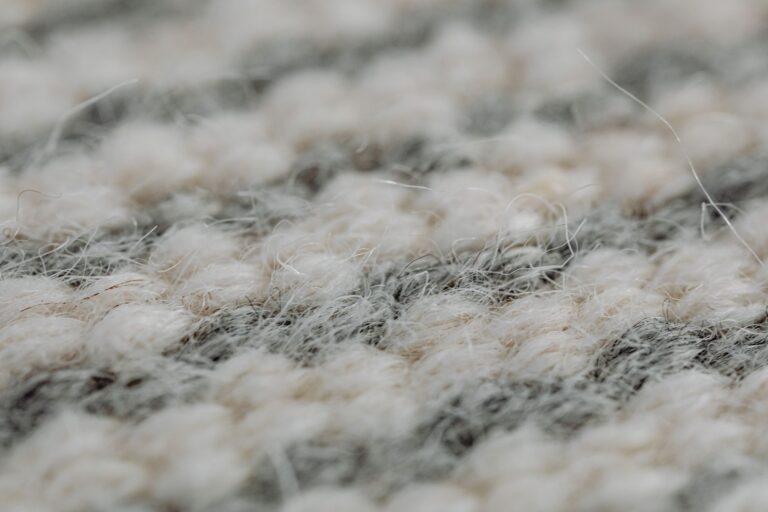


It turns the fibers and padding into a silent moisture reservoir that absorbs water vapor from the surrounding air, releases it slowly, and feeds microbial growth long before any stain appears on the surface. Wool can hold up to 30% of its own weight in water, nylon and olefin absorb far less, and the padding underneath traps moisture for days after the face fiber feels dry to the touch. Once indoor relative humidity climbs above 60% for more than a day, the conditions for musty odor, mold colonies, and adhesive breakdown start to take hold.
This guide explains how humidity quietly compromises carpet from the padding up, and walks homeowners through seven early warning signs along with practical fixes before mold or odors take hold.
The Hidden Relationship Between Carpet and Indoor Moisture
Relative humidity is the percentage of water vapor the air holds compared to what it could hold at that temperature. Carpet fibers, the backing layers, and the pad underneath all exchange moisture with that surrounding air constantly, like a slow-breathing sponge. When humidity rises, fibers swell and absorb; when it falls, they release that moisture back into the room.
Wool is the most absorbent of the common carpet fibers, capable of holding up to 30% of its own weight in water before feeling damp. Nylon and olefin (polypropylene) absorb far less, which is why synthetic carpets tolerate humid climates better, yet even they respond to sustained ambient moisture. The padding beneath the carpet is where the real reservoir lives. Rubber, rebond foam, and felt padding all hold water far longer than the face fiber, often days after the surface feels dry to the touch.
The Safe Humidity Window
The sweet spot for carpet and indoor air quality sits between 30% and 50% relative humidity. Within that range, fibers stay dimensionally stable, adhesives cure properly, and microbial activity stays suppressed. Drop below 30% and the air becomes too dry, leaving fibers brittle, raising static, and increasing VOC emissions from adhesives and backing. Climb above 60% and the conditions for mold, mildew, and dust mite colonies start to ripen. Indoor humidity guidance from the EPA points to keeping RH below 60% in general, and ideally between 30% and 50% for households concerned about allergies.
With those target ranges in mind, the next question is where excess moisture actually breaks down a carpet.
A simple $10 thermohygrometer gives you a number to act on. Without one, you end up guessing whether your carpet sits in a safe environment or a slow incubator.
Where Damage Actually Starts: From Padding Up to the Surface
Moisture damage in carpet rarely begins on the surface you walk on. It starts in the padding, where warmth, darkness, and trapped humidity create ideal conditions for microbial colonies. By the time a stain or smell reaches the top of the pile, the pad may have been damp for weeks.
Bacterial and fungal activity in the padding produces volatile organic compounds, the chemical signature of that musty smell that seems to have no visible source. As colonies expand, the adhesives holding carpet to the subfloor begin to soften and lose grip. Seam separation, bubbles, and ripples follow. Eventually, the primary backing starts to pull away from the secondary layer in a process called delamination, and the surface takes on a buckled, cupped, or persistently wavy appearance that no amount of restretching fixes.
The Hidden Timeline of Carpet Moisture Damage
- Days 1 to 3: Padding absorbs moisture from a spill, leak, or high humidity event. Surface feels fine.
- Week 1 to 2: Microbial colonies establish in the pad. Musty odor begins, often mistaken for HVAC or pets.
- Month 1 to 3: Adhesives soften. Seams lift slightly. Backing begins to delaminate at stress points.
- Month 3 to 12: Visible buckling, cupping, and waviness appear. Subfloor may already show staining or rot.
- Year 1 and beyond: Padding compressed and colonized beyond recovery. Carpet requires full replacement, not cleaning.
Reading the Warning Signs Before Mold Becomes Visible
Catching humidity damage early means paying attention to smell, sight, and symptoms before the surface gives up its secret. Most homeowners notice the odor long before they see anything, because microbial off-gassing starts in the pad where the eye cannot reach.
A damp or earthy smell that intensifies after rain, in closed rooms, or when the HVAC first kicks on is often the earliest reliable indicator. Dark spots, greenish patches, or a persistent shadow along baseboards suggest active growth underneath. A hygrometer reading above 60% RH that holds for more than 24 hours signals conditions ripe for colonization. Allergy or asthma symptoms that ease outside but flare indoors point to elevated dust mite and mold spore loads in the carpet.
These warning signs become easier to interpret once the fiber and backing themselves shape how much moisture the carpet can hold.
A Self-Diagnosis Checklist
- Smell test: Walk into the room after it has been closed for four hours. Any musty or earthy note is a red flag.
- Baseboard check: Look for dark lines or shadowing where carpet meets the wall, especially on exterior walls.
- Hygrometer reading: Anything above 60% RH for more than a day warrants action.
- Symptom pattern: Wheezing, itchy eyes, or congestion that clears outdoors and returns indoors points to carpet as a reservoir.
- Static and stiffness: New shocks in winter or fibers that feel unusually crisp signal the opposite problem, air that has become too dry.
Why Carpet Material Changes the Humidity Risk Profile
Not all carpet reacts to humidity the same way. The face fiber, the backing, and the padding underneath each contribute to the overall vulnerability, and the wrong combination in a damp basement or coastal home can cut carpet lifespan in half.
Wool breathes beautifully and regulates indoor moisture like a natural buffer, but it also feeds mold readily once soaked. Nylon resists absorption and dries quickly, making it a more forgiving choice in basements, bathrooms, and homes near the coast. Olefin (polypropylene) repels water almost entirely, though it can trap moisture vapor beneath its backing, where it condenses against the subfloor. Natural fiber blends including jute or sisal act as wicks, pulling moisture from the subfloor up into the room, which sounds helpful until the room above ends up with damp padding.
Material-by-Material Humidity Comparison
| Fiber Type | Moisture Absorption | Mold Resistance | Best Environment |
|---|---|---|---|
| Wool | Up to 30% of weight | Low once soaked | Climate-controlled, low-humidity rooms |
| Nylon | Low to moderate | Good | Most residential rooms, basements |
| Olefin (Polypropylene) | Very low | High on face, risk under backing | Outdoor, basements, coastal homes |
| Jute / Sisal | High (wicking) | Low | Dry, climate-controlled rooms only |
| Triexta | Low | Good | Humid climates, family rooms |
Padding density and material matter as much as the face fiber. Dense rubber padding holds water far longer than rebond foam, which is why basements with rubber-backed carpet often smell musty even when the surface feels dry. For moisture-prone rooms, padding with an open-cell structure and antimicrobial treatment pairs best with a moisture-barrier backing on the carpet itself, a combination the Carpet and Rug Institute specifically recommends.
The Dual Risk Most Homeowners Overlook: Too Little Humidity
Most carpet humidity content focuses on too much moisture, but air that dries out below 30% RH creates its own set of problems. Dry winter air pulls moisture out of carpet fibers, leaving them brittle, prone to crushing under foot traffic, and more likely to shed.
Static buildup becomes a daily nuisance, and every spark attracts dust and fine allergens straight into the pile. VOC off-gassing from carpet backing, adhesives, and padding rises as materials dry out and outgas more actively, which can trigger headaches and respiratory irritation in sensitive households. A simple hygrometer check helps separate low-humidity complaints from genuine mold-related illness, since the symptoms often overlap.
How to Tell Which Direction Your Air Has Gone
If your carpet shocks you when you walk across it in January, the problem is too little moisture, not too much. The fix is a humidifier set to 40% RH, not a dehumidifier.
Respiratory irritation from dry indoor air can mimic allergy symptoms and confuse the diagnostic picture. Run a hygrometer for a week. If readings sit below 30%, a whole-house humidifier or a console unit in the carpeted room restores balance. If readings climb above 55%, the answer is the opposite: a dehumidifier sized to the square footage.
Those target numbers only work if the right equipment is actually in the room, which is where a practical step-by-step comes in.
Preventing and Reversing Humidity Damage Step by Step
Prevention is cheaper than replacement, and the steps are straightforward once the humidity window is clear. Aim for 30% to 50% RH year-round, address spills within 24 to 48 hours, and keep the HVAC system delivering conditioned air to every carpeted room.
Place a calibrated hygrometer in the carpeted room and check it weekly. Run a dehumidifier in basements, bedrooms over garages, and any room that holds above 55% RH for more than 24 hours. Service the HVAC system quarterly, replace filters on schedule, and verify that supply vents actually reach carpeted areas, since closed or blocked registers create stagnant zones where moisture accumulates.
Daily and Seasonal Habits That Protect Carpet
- Vacuum twice weekly: Use a HEPA-filtered machine in humid months to remove spores before they settle deep into the pile.
- Extract within 24 to 48 hours: After any spill, leak, or flooding event, pull water with fans, a dehumidifier, and weighted drying. Replace padding even when the surface recovers quickly.
- Schedule hot-water extraction: A professional cleaning every 12 to 18 months, per IICRC guidelines, removes embedded contaminants without over-wetting.
- Avoid over-shampooing: Residual moisture between cleanings feeds the very microbes you are trying to remove.
- Choose synthetic face fibers in damp rooms: Pair them with low-retention padding to shorten drying time after any wetting event.
The 24 to 48 Hour Rule for Water Events
Carpet and padding that stay wet beyond 48 hours almost always develop microbial colonization that surface cleaning cannot reach. That 48-hour mark is the threshold the Institute of Inspection, Cleaning and Restoration Certification (IICRC) sets between restoration and replacement. Pull up the carpet, dry the subfloor, and replace the padding even if the carpet itself looks fine. Skipping the pad replacement is the single most common reason a “saved” carpet starts smelling musty six months later.
Knowing When DIY Stops and Professional Restoration Begins
Some moisture events fall outside the scope of a household dehumidifier and a wet-vac. Knowing where that line sits protects both your health and any insurance claim that follows.
Floodwater from clean sources still demands industrial extraction if the carpet was saturated for more than a day. Sewage backup, sump pump failure, or any water labeled Category 2 or 3 by the IICRC requires full carpet and padding replacement, since the contaminants include pathogens that no surface cleaning can remove. A persistent musty odor after a week of drying confirms microbial colonization in the pad that household methods cannot reach.
Clear Signals to Call a Professional
- Category 2 or 3 water: Any water from a sump pump, washing machine overflow, or sewer line demands full removal per IICRC S500 standards.
- Visible mold beyond 10 square feet: The EPA recommends professional remediation for any patch larger than a bath towel.
- Symptoms that vanish only when you leave: Allergy or asthma relief that returns only outside the home signals an air quality problem beyond a vacuum’s reach.
- Subfloor damage suspected: ASTM F1869 calcium chloride moisture testing on concrete subfloors confirms whether moisture is wicking up from below.
- Insurance documentation needed: A restoration contractor’s moisture readings and photo log protect any claim that may follow.
Bottom Line
Humidity affects carpet from the pad up, not the surface down, which is why damage so often appears sudden after years of hidden incubation. Keep indoor relative humidity between 30% and 50%, measure it with a thermohygrometer, extract any water within 48 hours, and replace padding after serious wetting. Catch the smell before the spot, and your carpet, your air, and your wallet all stay healthier.
FAQ
What humidity level is bad for carpet?
Indoor relative humidity above 60% sustained for more than a day creates the conditions for mold and mildew in carpet fibers and padding. Aim for 30% to 50% RH to keep carpet stable and indoor air quality healthy. Below 30% RH dries fibers out and increases static and VOC off-gassing.
Can high humidity cause carpet to mold?
Yes. Mold needs moisture, a food source, and temperatures between 60 and 80 degrees Fahrenheit, all of which carpet padding provides once humidity climbs above 60% for an extended period. The Carpet and Rug Institute confirms that microbial colonies can establish in padding within 24 to 48 hours of saturation.
How do you protect carpet from humidity?
Run a dehumidifier in damp rooms, keep indoor RH between 30% and 50%, vacuum twice weekly with a HEPA-filtered machine, and service the HVAC system on schedule. Address any spill or leak within 24 to 48 hours and replace padding after serious wetting even when the surface looks fine.
Does humidity make carpet smell?
Yes. The musty, earthy odor that develops in humid weather comes from microbial volatile organic compounds released by bacteria and mold colonies in the padding. Surface cleaning rarely reaches these colonies, which is why the smell returns after every shampoo.
Should I run a dehumidifier to protect my carpet?
Yes, in any room that holds above 55% RH for more than 24 hours. Basements, bedrooms over garages, and ground-level rooms in coastal or southern climates benefit most. A unit sized to the room’s square footage, with the drain line routed to a sink or floor drain, runs with minimal attention.
How do you dry out a damp carpet?
Pull up the carpet, lift the padding, and run fans and a dehumidifier for 48 to 72 hours. Replace the padding in all cases; dry the subfloor underneath; and only re-lay the carpet once moisture readings on the subfloor drop below safe thresholds. Professional extraction equipment speeds the process considerably for large areas.